ESD coating for plastics — without changing the die, mold, material, or supplier.
Turn standard plastic parts into visible ESD-control components. ProShieldESD converts polypropylene, ABS, polycarbonate, acrylic and selected engineering plastics into filler-free static-control surfaces for electronics, telecom, defence, industrial and ATEX-relevant projects.

Keep the plastic you want. Add the ESD performance you need.
Traditional ESD plastic often forces teams into special conductive compounds, custom sourcing, minimum-order production, color compromise, material changes, or new die and mold investment. ProShieldESD gives a different route: choose the plastic part for its design and performance — then add ESD functionality at the surface.
No new die or mold investment
Convert existing plastic parts, ready-made components or standard purchased items into ESD-control parts without redesigning the tool.
Works across plastic families
Suitable candidate substrates include polypropylene composites, ABS, polycarbonate, acrylic and selected engineering plastics.
Visible ESD control
Coated parts can be visually distinguished from ordinary plastic parts, supporting operator discipline, segregation and audit clarity.
Filler-free conductivity
ESD performance is added through conductive polymer surface technology — without carbon black, graphite or metal powders.
ESD performance at the surface — not by filling the entire plastic.
Conventional ESD plastic usually depends on conductive fillers distributed through the bulk material. That can affect color, surface finish, resistivity consistency, processing behavior and mechanical properties.
ProShieldESD takes a different approach. It creates an ESD-control surface using intrinsic conducting polymer technology, allowing the base plastic to be chosen for the part’s actual design and performance requirements.
Preserve the base plastic choice
Choose plastic parts for strength, weight, transparency, chemical resistance, availability, cost or geometry — then add ESD performance through coating.
Avoid carbon-filled plastic limitations
Carbon-filled ESD plastics can introduce filler-distribution inconsistency, resistivity variation, carbon contamination concerns, color limitations and changes in mechanical behavior.
Support stable ESD control
ProShieldESD is designed for durable, non-migrating ESD performance without depending on temporary topical anti-static treatments.
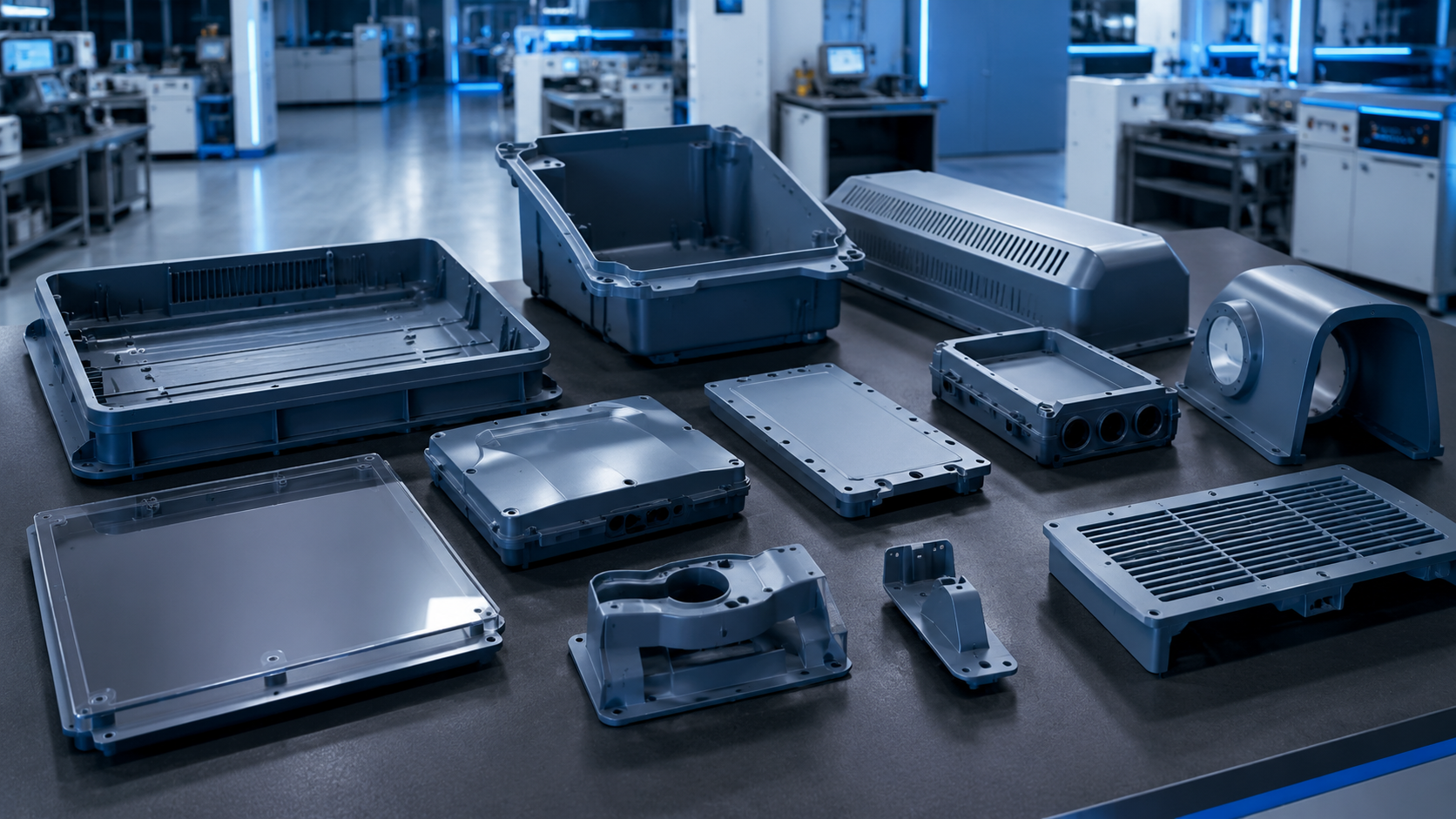
Buy the plastic part you need. Make the surface ESD-safe.
For many ESD applications, the smartest solution is not to redesign the part, change the plastic compound or invest in new tooling. ProShieldESD enables teams to upgrade finished plastic components with a functional ESD surface.
One ESD coating technology for many plastic and polymer parts.
ProShieldESD can be evaluated for multiple rigid plastic and polymer substrates where static-control performance is required at the surface.
Polypropylene and PP composites
For trays, containers, covers, industrial molded parts, handling fixtures and selected polypropylene composite components.
ABS and engineering plastics
For equipment housings, control boxes, machine enclosures, covers, fixtures, panels and technical plastic components.
Polycarbonate and acrylic
For transparent or semi-transparent covers, guards, panels, screens, shields and protective plastic parts used in controlled environments.
A practical ESD route for electronics, defence, telecom, ATEX and industrial plastic parts.
Plastic parts are used everywhere in ESD-controlled and static-sensitive environments. ProShieldESD allows selected parts to be upgraded for static control without changing the original component design.
Electronics manufacturing
PCB handling trays, component trays, inspection trays, rework accessories, plastic tool holders, workstation organisers, covers and production fixtures.
Defence and aerospace
Electronic housings, rugged cases, UAV covers, avionics support parts, instrument covers, composite panels and field equipment components.
Telecom and data infrastructure
Telecom enclosures, router housings, cable management parts, rack accessories, patch-panel covers, equipment trays and network equipment covers.
ATEX and hazardous-area projects
Plastic housings, covers, guards, trays and non-metallic parts where static-control performance may support explosive-atmosphere compliance design.
Industrial plastics
Machine guards, plastic panels, equipment covers, control-box covers, conveyor guides, jigs, fixtures, enclosures and assembly aids.
Automotive and EV
Battery module covers, electronics housings, sensor enclosures, dashboard components, connector covers, EV electronics parts and assembly trays.
Cleanrooms and laboratories
Cleanroom trays, lab organisers, inspection fixtures, medical device assembly trays, controlled-environment containers and precision handling parts.
Sensitive material handling
Plastic trays, non-metallic fixtures, protective covers and containers used where static charge on plastic surfaces can create product, process or safety risks.
Packaging and logistics
Reusable containers, totes, crates, dunnage trays, component transport boxes, storage systems and returnable transit packaging.
A simpler route for plastic parts used in explosive-atmosphere projects.
In ATEX-related projects, static charge accumulation on plastic parts can become a serious design and compliance concern. ProShieldESD converts ordinary plastic surfaces into controlled ESD surfaces, helping selected coated parts become easier to evaluate, test and certify as part of the final ATEX product approval process.
Customer ATEX certification success
In one customer project, a plastic part was coated with ProShieldESD and the finished customer part successfully achieved ATEX certification as part of the customer’s final product approval process.
Regular plastic to ESD-control surface
ProShieldESD provides a practical way to convert selected regular plastic parts into static-control surfaces without changing the die, mold, material or supplier.
Supports compliance engineering
Useful for plastic housings, covers, guards, trays, fixtures and non-metallic components where controlled surface resistance is part of the compliance design.
Important: ATEX certification applies to the finished part, assembly or equipment in its intended use condition. ProShieldESD can support the static-control design, while final compliance depends on the complete product assessment, testing and certification process.
Designed for real production use — not just material substitution.
ESD control is not only about resistance values. In real facilities, operators must identify ESD-control items, auditors must verify them, and quality teams must maintain separation between ordinary plastic and ESD-safe plastic.
Operator recognition
Clearly distinguish ESD-control plastic parts from ordinary plastic items on benches, racks, carts and production lines.
Audit clarity
Support visual verification during ESD program audits, floor walks, incoming inspection and process reviews.
Controlled deployment
Convert only the parts that require ESD control instead of changing every plastic item in the supply chain.
Built for plastic parts that need reliable surface resistivity.
ProShieldESD is not a temporary anti-static spray. It is a functional ESD coating system designed to create static-control surfaces on selected plastic parts.
Filler-free conductive polymer system
Creates ESD functionality without bulk carbon loading, graphite, metal powder or conventional conductive filler dependency.
Conductive or dissipative grades
The coating system can be selected based on the required resistance range and ESD control requirement.
Long-term static-control design
Developed for durable, non-migrating ESD performance on suitable prepared plastic substrates.
Send the part. Coat the part. Use the part.
ProShieldESD can support product supply, application guidance or professional coating service depending on the part geometry, plastic type, application requirement and project scale.
Part evaluation
Review the plastic type, surface condition, geometry, handling method and intended ESD performance.
Application route
Select the coating grade, preparation method, application method and test approach for the part.
Verification
Check conductive or dissipative behavior according to the required ESD control plan and inspection requirement.
From ordinary plastic part to ESD-control component.
Each project should be evaluated based on polymer type, geometry, surface condition, resistance target, durability expectations and end-use exposure.
Identify the plastic
Confirm whether the part is PP, ABS, polycarbonate, acrylic, composite polymer or another candidate plastic family.
Evaluate the use case
Review handling, abrasion, cleaning, chemical exposure, visibility requirements and ESD control target.
Coat and cure
Apply the suitable ProShieldESD system using the selected preparation and coating method.
Test and release
Verify ESD performance and document suitability for the intended use environment.
Learn before you specify.
Explore ProShieldESD technology, technical articles and FAQs before selecting an ESD coating system for plastic parts.
Technology
Understand how conductive polymer technology creates filler-free, stable and long-term ESD surface control.
Open Technology page →Knowledge Hub
Read technical articles covering ESD fundamentals, applications, standards, testing and troubleshooting.
Open Knowledge Hub →FAQs
Find answers to common questions about ProShieldESD technology, applications and performance.
View FAQs →ESD coating for plastics, polypropylene, ABS, acrylic and polycarbonate parts
ProShieldESD is an ESD coating for plastic parts designed to convert selected polypropylene, ABS, polycarbonate, acrylic and engineering plastic components into static-control surfaces. It allows manufacturers and facilities to upgrade ready-made plastic parts without changing the die, mold, raw material or supplier.
Conventional ESD plastics often rely on carbon black, graphite, metal particles or conductive fillers added into the bulk plastic. These filler-based systems can affect appearance, resistivity consistency, processing behavior and mechanical properties. ProShieldESD takes a different approach by adding ESD functionality as a conductive polymer surface technology.
This makes it useful for ESD trays, plastic housings, telecom enclosures, machine guards, electronic equipment covers, cleanroom plastic parts, laboratory trays, industrial plastic components, ATEX-relevant plastic parts and other components used in ESD-controlled or static-sensitive environments.
Common questions about ESD coating on plastic parts.
Can ordinary plastic parts be converted into ESD-safe parts?
Yes. Suitable plastic parts can be evaluated and coated with ProShieldESD to create a conductive or dissipative ESD-control surface without changing the original die, mold or bulk plastic material.
Which plastics can be evaluated?
Candidate substrates include polypropylene composites, PP parts, ABS, polycarbonate, acrylic, FR-grade plastics, selected engineering plastics and rigid polymer components. Final suitability depends on the plastic type and end-use requirement.
How is this different from carbon-filled ESD plastic?
Carbon-filled ESD plastics use conductive fillers throughout the bulk plastic. ProShieldESD creates an ESD-control surface coating, avoiding bulk carbon loading and helping preserve the selected base plastic material.
Can coated plastic parts support ATEX certification?
ProShieldESD-coated plastic parts can significantly simplify the route to ATEX compliance by providing a controlled ESD surface. Selected coated parts can be evaluated, tested and certified as part of the final ATEX product approval process.
Why is visible ESD identification useful?
Visible ESD surfaces help operators, quality teams and auditors distinguish ESD-control parts from ordinary plastic parts in production areas, storage areas and inspection zones.
Have a plastic part that needs ESD or ATEX-relevant performance?
Share the plastic type, part geometry, application environment and ESD target. ProShieldESD can help evaluate whether the part is suitable for conversion into an ESD-control component.
Note: Final performance depends on plastic type, surface condition, surface preparation, coating system selection, curing conditions, handling exposure and verification testing. Depending on polymer type, surface energy and end-use conditions, surface preparation and/or a compatible primer may be recommended after evaluation. ATEX certification applies to the finished part, assembly or equipment in its intended use condition.